2026, A Year of Gothic: Theatre, Films and Fiction
Updated: Sep 30
Looking back over the past few years, I have set myself annual challenges that combine theatre and film in ways that push me to see work I might not ordinarily seek out. In 2024 I undertook a project revisiting all the productions I had seen at the theatre and cinema in 1984. In 2025 I focused on filling in gaps in my Sondheim knowledge, watching musicals live and exploring his top forty films. Both years encouraged me to view familiar works differently, take risks and draw connections across stage and screen.
For 2026, I have taken that approach into Gothic territory. Having completed an MA in Gothic studies and spent years researching and thinking about the ways the uncanny and the macabre can manifest in performance, I set out to explore Gothic themes month by month through live shows, films and fiction. What began as a plan to explore different aspects of the Gothic has become a much broader journey through fairy tales, haunted houses, obsession, vampires, the afterlife, science, moral authority, psychological unease and witchcraft. Each month has offered a different way into the Gothic, often taking me somewhere I did not quite expect to go.
Here's the ten months mapped out. Theatre trips booked, films planned and complementary fiction selected. Note: The films and novels may change after I have seen the show.
January – Into the Woods
Venue: The Bridge Theatre, London Theme: Fairy-Tale Gothic: Innocence, Consequence and the Dark Forest
Sondheim and Lapine dismantle the logic of fairy tales by following the story beyond the wish fulfilment. The forest is a liminal Gothic space where moral choices accumulate weight. Community fractures, responsibility cannot be escaped and the comfort of narrative closure is exposed as a dangerous illusion.
Films: Into the Woods (2014), Tale of Tales (2015), Tideland (2005), The Singing Ringing Tree (1957)
Fiction: The Night Circus by Erin Morgenstern and The Binding by Bridget Collins

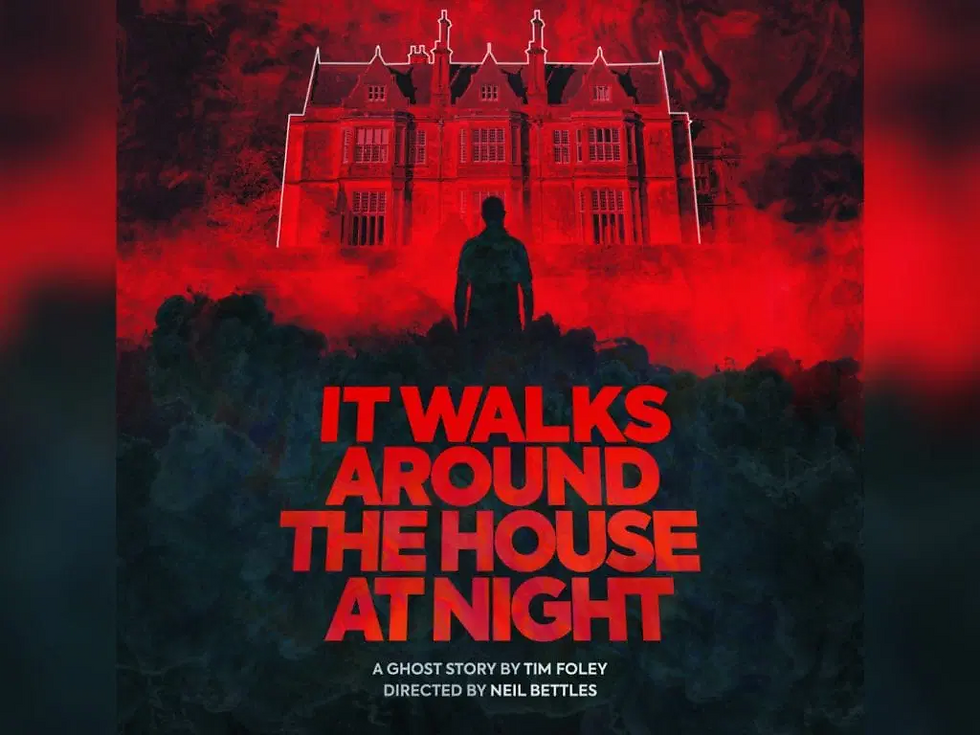
February – It Walks Around the House at Night
Venue: Chichester Festival Theatre
Theme: Haunted Houses
It Walks Around the House at Night is a contemporary ghost story that draws on the enduring power of the haunted house. An out-of-work actor is hired to impersonate the ghost said to haunt a remote country estate, only to find himself caught in something far less theatrical and far more unsettling. As myth, performance and reality begin to blur, the play explores why certain places seem to hold on to the past, and why some presences refuse to leave. Rooted in the imagery of the isolated house and surrounding woods, the production blends traditional Gothic atmosphere with modern psychological unease, allowing fear to emerge gradually as the familiar becomes strange.
Films: The Others (2001), The Uninvited (1944), Presence (2024), Burnt Offerings (1976)
Fiction: Mexican Gothic by Silvia Moreno-Garcia and The House Next Door by Anne Rivers Siddons
March – The Red Shoes
Venue: Mayflower Theatre, Southampton
Theme: Obsession and Art: When Performance Takes Possession
Matthew Bourne’s The Red Shoes presents artistic creation as something both transcendent and dangerous. Ambition becomes compulsion, and performance begins to eclipse the self, as identity dissolves into the demands of art. The body — disciplined, admired and exhausted — becomes the site of sacrifice, suggesting that beauty and destruction are inseparable when devotion to creation becomes absolute. Like the fairy tale that inspires it, the story asks what is lost when art refuses to release those who serve it.
Films: The Red Shoes (1948), Black Swan (2010), Perfect Blue (1997), All That Jazz (1979)
Fiction: The Turnout by Megan Abbott and Astonish Me by Maggie Shipstead

April – Dracula
Venue: Noel Coward Theatre, London
Theme: Vampires: Desire, Identity and Transformation (part 1)
This new reimagining of Dracula, performed by Cynthia Erivo in a one-woman production, reframes vampirism as something fluid and psychological rather than purely monstrous. By fragmenting identity and shifting between roles, the production explores the vampire as a figure shaped by desire, performance and transformation. Here, monstrosity is not simply an external threat but something bound up with longing, power and self-creation, continuing the Gothic tradition of using the vampire to explore anxieties around sexuality, identity and control.
The month’s films explore how contemporary cinema continues to reinterpret the vampire myth. Two offer striking modern perspectives directed by women, while two foreground Black vampire figures, reflecting how the mythology of Dracula continues to evolve across cultures, identities and creative voices.
Films: A Girl Walks Home Alone at Night (2014), Humanist Vampire Seeking Consenting Suicidal Person (2023), Blade (1998), Ganja & Hess (1973)
Fiction: Carmilla by Sheridan Le Fanu

May – Dracula
Venue: London Palladium Theme: Vampires: Desire, Identity and Transformation (part 2)
Following April’s psychological reinterpretation, May turns to Dracula in a more operatic and sensual form. Joel Burke’s ballet transforms the vampire myth into movement, using classical music and choreography to express what Gothic literature has long suggested: that vampirism is as much about seduction and desire as it is about horror.
In dance, Dracula becomes less a monster lurking in shadows and more a figure of hypnotic attraction. Bodies circle, pursue and yield; the language of choreography mirrors the Gothic tension between control and surrender. The story’s themes of immortality, temptation and transformation are rendered physically, with dancers embodying the pull between life and death.
This month’s films reflect the enduring popularity of Bram Stoker’s creation across different styles and eras, from romantic reinterpretation to grand Gothic spectacle, with two ballets and two films from last year.
Films: Dracula: A Love Story (2025, Luc Besson), Dracula (2025, Radu Jude), Dracula: Pages from a Virgin's Diary (2002, Guy Maddin) and Dracula Live (2019, Northern Ballet).
Fiction: The Dracula Tapes by Fred Saberhagen and a selection of Bram Stoker's short stories.

June – Beetlejuice: The Musical
Venue: Prince Edward Theatre, London
Theme: Carnivalesque Gothic: Spectacle, Mischief and the Afterlife as Theatre
Beetlejuice revels in grotesque humour and theatrical excess, transforming death into spectacle and the supernatural into entertainment. Authority collapses, rules are broken, and identity becomes fluid as the living and the dead collide in a world governed by chaos rather than morality. Blending horror with comedy, the story draws on the Gothic tradition of carnival and inversion, where laughter unsettles as much as fear and the familiar becomes gleefully strange.
Films: Beetlejuice (1988), House (1977), Death Becomes Her (1992), Brazil (1985)
Fiction: We Have Always Lived in the Castle by Shirley Jackson and The Amazing Mr Blunden by Antonia Barber

July – -320°F
Venue: Sadler’s Wells, London Theme: Scientific Gothic: Immortality, Memory and the Faustian Imagination
-320°F explores one of the Gothic’s most persistent anxieties: what happens when human beings try to outwit mortality. A biotechnology expedition into a mythical relic triggers a descent through genetic memory, ancient history and scientific ambition, where bodies, identities and timelines begin to blur. Moving between past and present, myth and medicine, Hideki Noda’s play asks whether the pursuit of longevity and enhancement is an act of progress, or a form of self-destruction disguised as advancement.
Films: The Hourglass Sanitorium (1973), The Fountain (2006), The Pied Piper (1986), Dead Man (1995).
Fiction: The Island of Doctor Moreau by H. G. Wells and The Last Man by Mary Shelley

August – Death Note
Venue: Barbican Centre, London
Theme: Moral Gothic: Justice, Power and the Corruption of Absolute Authority
Death Note places the Gothic in the hands of pure logic: what happens when a single individual gains the power to decide who deserves to live or die. When student Light discovers a supernatural notebook that kills anyone whose name is written within it, his attempt to create a “better world” collapses into obsession, control and self-justification. Pursued by the elusive detective L, the story becomes a duel of intellects in which morality is constantly redefined by whoever holds power.
This is a Gothic of systems rather than castles: surveillance, bureaucracy, ideological certainty and the illusion of perfect justice replacing ghosts and ruins.
Films: M (1931), Death Note (2006), Minority Report (2002), Angel Heart (1987)
Fiction: The Wicked + The Divine: The Faust Act by Kieron Gillen & Jamie McKelvie and The Picture of Dorian Gray by Oscar Wilde, Ian Edginton & I.N.J. Culbard

September – The Seven Deadly Sins & The Human Voice
Venue: Charing Cross Theatre, London Theme: Psychological Gothic: Desire, Isolation and the Fractured Self
This opera double bill performed by soprano Katherine McIndoe pairs Kurt Weill and Bertolt Brecht's The Seven Deadly Sins with Francis Poulenc and Jean Cocteau's The Human Voice to explore women pushed to the edge by the demands of society and love. In The Seven Deadly Sins, Anna is divided into two selves as she undertakes a journey through America in pursuit of wealth, exposing the corrosive effects of ambition, conformity and self-sacrifice. In The Human Voice, a woman clings to the final moments of a failed relationship through a single telephone conversation, her emotional world gradually unravelling as communication itself begins to fail. Together, they present the Gothic as an interior landscape, where fractured identity, isolation and obsession become the true horrors, revealing how social expectation, desire and emotional dependence can erode the self as surely as any supernatural curse.
Films: The Bitter Tears of Petra von Kant (1972), Persona (1966), 3 Women (1977), Repulsion (1965)
Fiction: The Yellow Wallpaper by Charlotte Perkins Gilman and The Hearing Trumpet by Leonora Carrington.

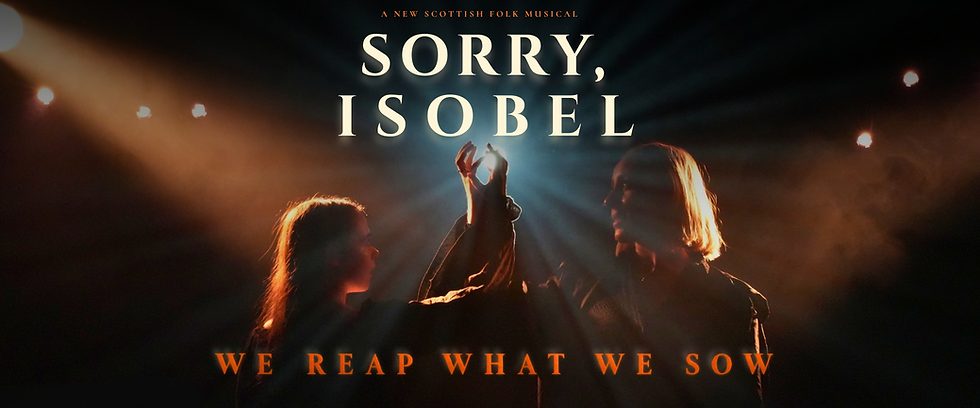
October – Sorry, Isobel
Venue: Drayton Arms Theatre, London
Theme: Witches
October turns to the witch: not the fantasy witch of fairy tales, but the woman labelled, feared, persecuted and transformed into a figure of folklore. Sorry, Isobel, a new musical based around the story of Scottish witch Isobel Gowdie, provides the month's theatrical focus, bringing the history of witch trials and the stories told about the women accused of witchcraft into the present.
The month connects the history of witch-hunting in Britain with the very different ways witches have been represented in Eastern European cinema. From the Essex witch trials to Czech and Soviet folklore, these works explore the witch as a product of fear, belief and power, while also asking what lies behind the stories that survive.
The personal thread begins with Manningtree Witches, bought during a visit to Manningtree earlier this year, one of the places most closely associated with the Essex witch trials, alongside The Lighthouse Witches, bringing witch folklore into contemporary Gothic fiction. Together with Sorry, Isobel, they provide different perspectives on historical witches, the stories constructed around them and their continuing hold on the imagination.
Films: Witchfinder General (1968, Michael Reeves), Witchhammer (1970, Otakar Vávra), Häxan (1922, Benjamin Christensen) and Viy (1967, Konstantin Yershov and Georgiy Kropachyov).
Fiction: Manningtree Witches by A.K. Blakemore and The Lighthouse Witches by C.J. Cooke.
November - TBC
December – Christmas Gothic
Venue: The Spring, Havant Theme: Christmas Ghost Stories
December turns to the darker side of Christmas: the old tradition of gathering in winter darkness to tell stories of ghosts, hauntings and things that refuse to stay buried. Christmas Gothic, a one-woman theatrical adaptation by Dyad Productions, provides the month's focus, reviving the Victorian tradition of the Christmas ghost story through three seasonal tales of terror.
The month explores the curious relationship between Christmas and the Gothic. At the darkest point of the year, Christmas brings together warmth, celebration and memories of the past, while ghost stories introduce death, unease and the possibility that the dead may return. From Victorian fireside tales to twentieth-century horror, these works turn familiar Christmas settings into places of isolation, mystery and supernatural threat.
Films and fiction TBC

Follow me on instagram #EllensGothicYear


Comments